


You know, this blog post is a bit stupid.
Not stupid-stupid in a sense that it is not accurate but stupid when you actually sell hot work courses for a living.
Well, here it goes anyway:
Selecting the right tool isn’t just about efficiency—it’s about safety, preparation, and getting the job done without unnecessary complications. The right choice can often determine whether you can start working immediately or need to spend hours preparing your work area. Often accidents happen as people relate the risk and the duration of the task and cut corners when the task was supposed to take just a minute.
Well…this is still irrelevant. In case something went wrong and the guy managed to cause a fire they do not give a rats ass in court about the expected duration of the task.
Let’s look at a practical example: cutting a metal rod.
Three Tools, One Task
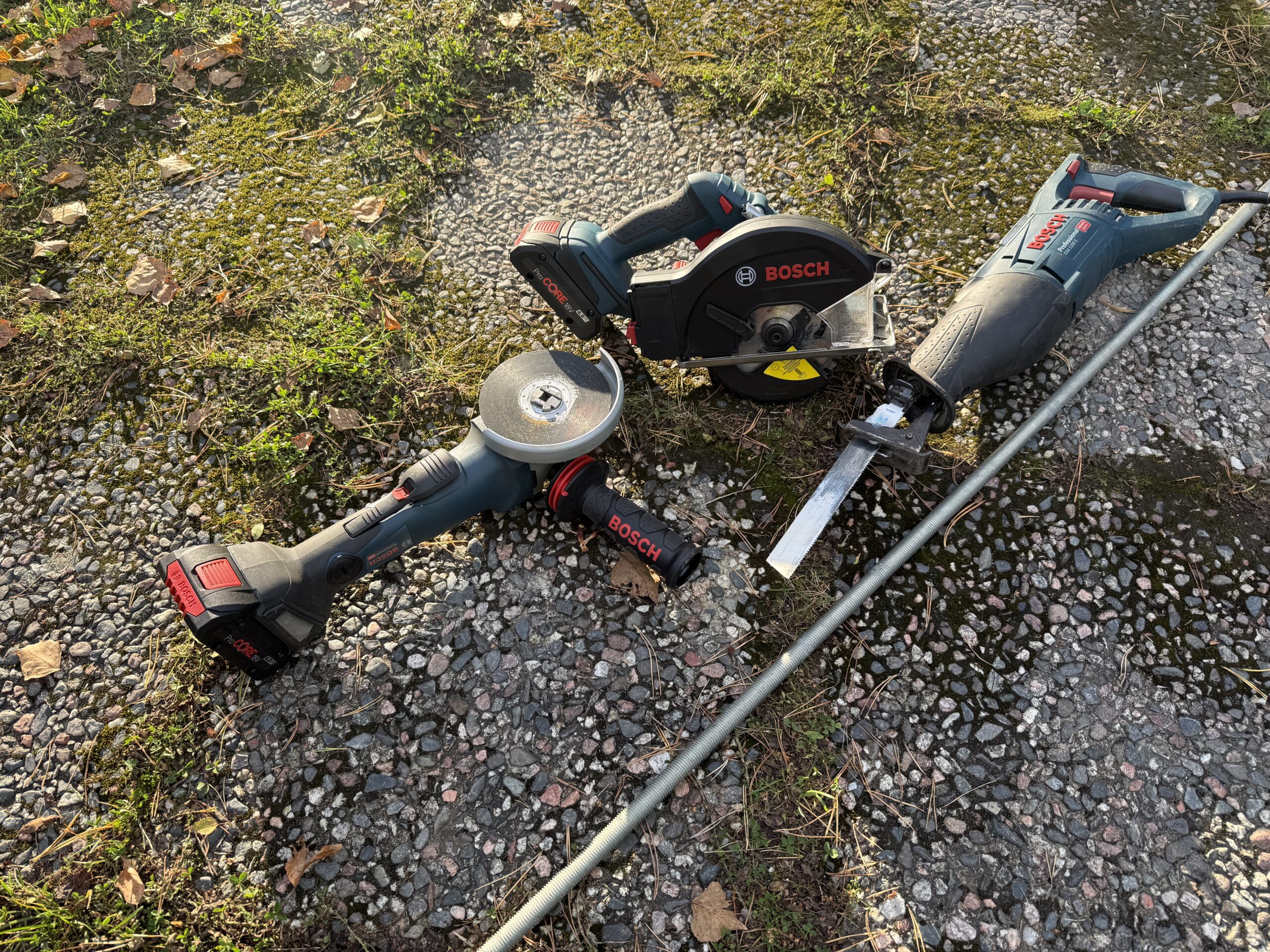
You have three machines available for the same job:
- Knife Saw
- Circular Saw
- Angle Grinder
All three are capable of cutting metal, but they come with very different implications for safety and work preparation.
1. Knife Saw – Safe and Simple
The knife saw (or hacksaw) is a straightforward hand tool. It doesn’t generate heat or sparks, so you can start cutting immediately. It’s ideal for smaller jobs or when you’re working in environments where fire safety is a concern.
2. Circular Saw – Fast but Controlled
A circular saw fitted with the correct blade for metal cutting is also a good, safe choice. Like the knife saw, it does not produce sparks under normal use, allowing you to begin work right away. It offers a faster, more efficient option while still keeping fire risks minimal.
3. Angle Grinder – Powerful but Risky and definitely Hot work
The angle grinder is the fastest and most aggressive option—but it introduces an important complication: sparks.
Because it generates sparks and heat, any grinding or cutting with this tool is classified as hot work. Welding is leading cause of hot work fires in Finland. Grinding second leading cause.
That changes everything.
Before you can even begin, several precautions are required:
- You need to obtain Hot work permit
- The area must be cleared of all flammable materials and debris.
- Protective barriers must be set up to prevent sparks from flying outside the immediate work zone.
- Fire extinguishers or other firefighting equipment must be readily available
- Hot work guarding must be organised for the whole duration of the work and continue at least 60 minutes after Hot work has completed
- The operator must wear heat-resistant protective clothing and follow proper safety procedures.
These steps are essential, but they take time. In other words, choosing the angle grinder adds significant preparation before a single cut can be made.
The Smart Choice in this case is not to do Hot Work
By selecting a non-sparking tool such as a knife saw or a circular saw, you can start the job immediately, safely, and without the additional administrative and safety requirements that hot work involves.
In many cases, avoiding hot work saves both time and effort—while still ensuring quality results and full compliance with safety standards.
Key Takeaway
When you’re choosing a tool, don’t just think about how fast it can cut. Think about what comes before and after the cut.
Sometimes the safer, spark-free option is not only the safest choice—it’s also the most efficient one.
Obviously this is not always possible and certain tasks require welding and grinding. So in case you need Hot work certification for your self or your crew, you can find additional information here: https://www.tva.fi/kurssi/hot-work-license/