


First aid preparedness is vital. Making sure that there are First aid skilled employees at the workplace is also mandatory in Finland and based on Occupational safety and health laws. Also safety standard SFS6002 for electrical safety standard requires this but that is not the main issue here. Point is that sudden need for First aid could arise anywhere and by helping you can save a life, downsize the damages caused by illness or seizure and also reduce patients recovery time.
Those are really frightening situations and without First aid training many feel helpless and don’t know what to do. Some even freeze in this situation. With First aid training we can build up confidence to help out in an emergency situation.
So – you want to get the hang of CPR? Good on you. It’s one of those life-saving skills that everyone should know, but most people only think about it once they’re halfway through a first aid course or watching a medical drama on telly. But what if you want to practise at home? You haven’t got a fancy mannequin lying around and practicing with someone is not possible either as it might even lead into an injury. Well, don’t worry – you absolutely can practise CPR at home using everyday items. It’s not about being perfect – it’s about building your confidence and getting your body used to the movement. And trust me, a bit of muscle memory goes a long way when panic kicks in.
What can you use to practise CPR at home?
Let’s be honest: you haven’t got a training dummy. But you’ve got a house full of useful things – you just need to get creative.
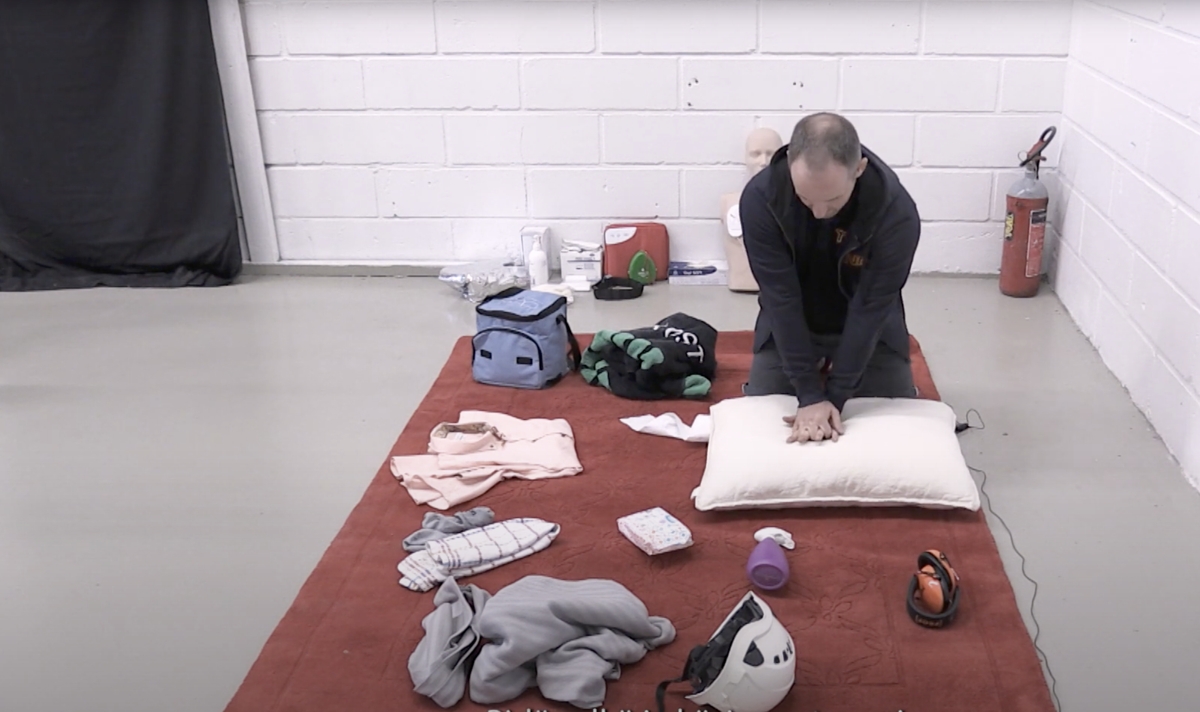
1. Pillow practice
Grab a regular sofa pillow or then the type you sleep on. Stick it on the floor, kneel beside it, and imagine it’s the chest of someone who’s collapsed. Interlock your hands, arms straight, shoulders directly above your hands, and get pumping. It won’t give you that ‘realistic resistance’, but it’s brilliant for getting your posture and positioning right.
2. Rolled-up towel
A bit of a step up from a pillow. Roll a towel up nice and tight – like you’re making a sausage – and lay it down. It gives you a bit more shape and resistance, so you can really focus on keeping your arms locked and driving down from the shoulders.
3. Stuffed bag
Got an old rucksack or gym bag? Fill it with old clothes, towels – whatever’s soft but bulky. Zip it up and use that as your CPR stand-in. It’s probably the closest you’ll get to a realistic feel without spending any money. Plus, it’s easier to judge the depth of compressions, especially if you pack it firm.