


Digitalisation has permanently transformed working life. Smart devices, remote work, digital systems and constant access to information have improved efficiency, but at the same time they have introduced a new kind of strain: technostress. Technostress is not always visible on the outside, yet its impact on wellbeing at work, safety and coping at work can be significant.
Today, we spend more and more of our time surrounded by various screens and beeping smart devices. A common saying describes this well: smart devices can be great servants, but poor masters.
About a year ago, I bought a smartwatch that tracks sleep, counts steps and even provides golf course layouts. While playing golf, you can check the distance to the green directly from your wrist. Convenient? Well… maybe.
At first, I was also fascinated by the feature that phone notifications appeared directly on the watch. There was no longer a need to take the phone out of my pocket every time it beeped – a quick glance was enough to decide whether a message required a response or was just a promotional notification.
But over time, the situation changed. For example, while working out at the gym, the device would alert me around ten times an hour. BEEP BEEP, BEEP BEEP – or more precisely, it vibrates on your wrist. Even if you try to filter emails and unsubscribe from mailing lists as they appear, it often feels like the same spammer quickly finds another route to reach you. The constant flood of notifications has genuinely started to irritate me, and even on the golf course I now record my scores the old-fashioned way with a pencil on a scorecard, instead of using the app designed for that purpose. In addition, some news services start pretty much all headlines as “BREAKING NEWS” You open it first enthusiastically and then discover that someone had seen a squarrel in the park or something else as ground breaking.
This is of course same thing at work. Constant interruptions distract you and at the end of the day it might be so that putting out of fires took all your energy and time and you did not do anything you were supposed to do when you started your day.
What Does Technostress Mean?
The rant above is simply an example of what inspired this blog post. The topic itself is much broader.
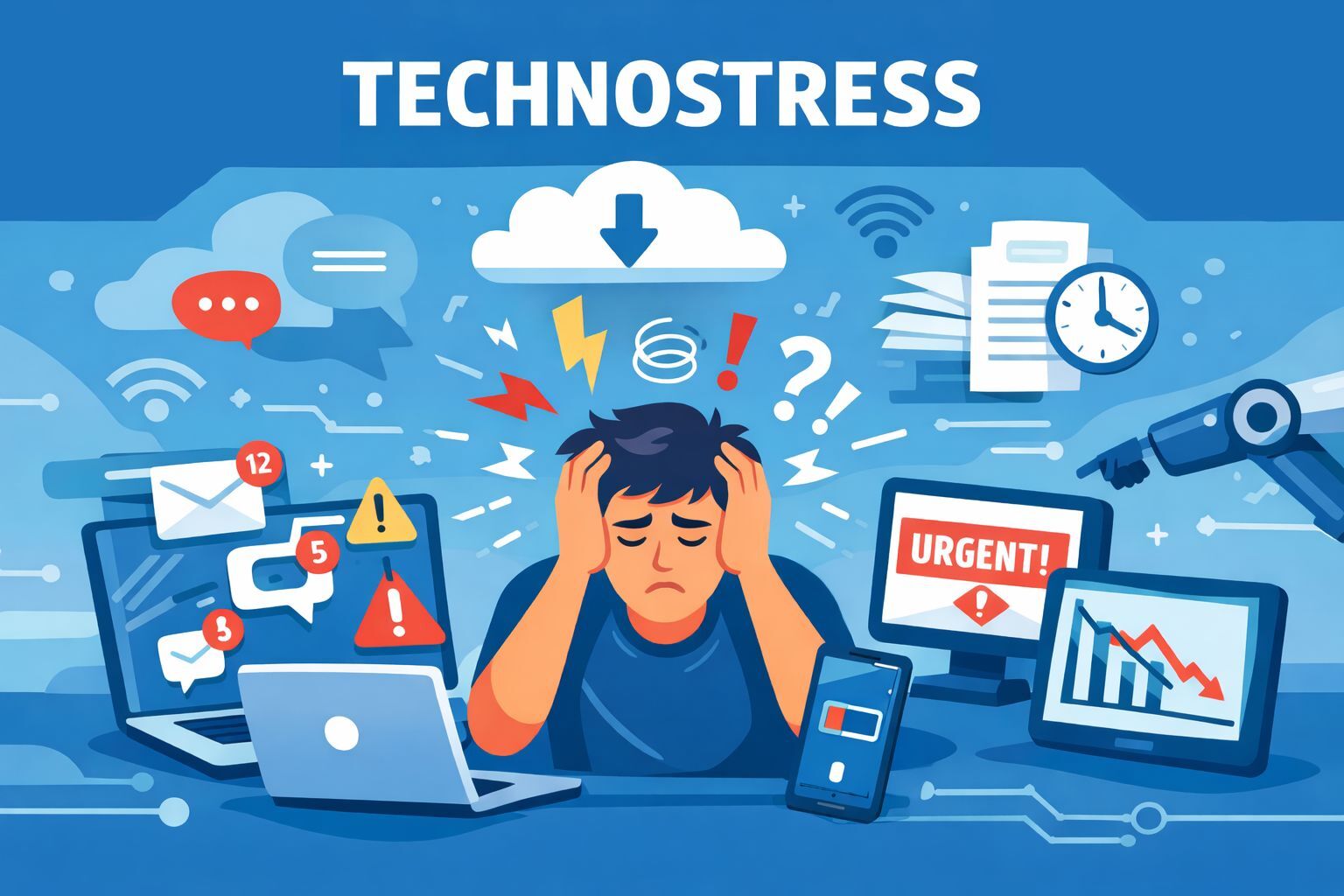
Technostress refers to stress and strain caused by the use of technology or the demands associated with it. It can occur, for example, when:
- digital systems are complex or constantly changing
- employees feel they cannot keep up with technological development
- work requires continuous availability and rapid responses
- technical disruptions or slow systems hinder work
- the boundaries between work and leisure blur due to digital tools
Technostress is not caused by technology itself, but by how it is used and what kind of demands it places on employees.
Common Symptoms of Technostress
Symptoms of technostress can be both psychological and physical, and they often develop gradually. Typical signs include:
- a constant feeling of hurry and overload
- concentration difficulties and memory lapses
- irritability or frustration when dealing with technical problems
- sleep disturbances and reduced recovery
- headaches, eye strain, or neck and shoulder pain
If prolonged, technostress can increase the risk of burnout and impair work quality as well as occupational safety.
Technostress and Occupational Safety
Technostress has a clear connection to occupational safety. When concentration weakens or mental strain increases, the risk of errors grows. This is particularly significant in safety-critical tasks such as industrial work, electrical work, logistics and maintenance.
For example:
- safety instructions may be overlooked
- decisions may be made hastily under pressure
- personal protective equipment or safety procedures may be forgotten
From an occupational safety perspective, technostress is therefore a risk factor that should be identified and addressed as part of comprehensive risk management.
How Can Technostress Be Prevented in the Workplace?
Managing technostress is not solely the responsibility of individuals – employers also play a key role. Effective measures include:
1. Clear Ground Rules
Agree on shared practices regarding availability, communication channels and response times. Not everything needs to happen in real time. As an example we could agree that phones or computers will not be present during a meeting so we can really fully focus on the meeting, toolbox talk or a safety training session.
2. Adequate Onboarding and Training
When new systems are introduced, sufficient time must be allocated for learning. Competence increases the sense of control and reduces strain.
3. Work Organisation
Technology should support work, not add unnecessary complexity. Overlapping systems and excessive reporting should be reduced.
4. Supporting Recovery
Breaks, ergonomics and a healthy work rhythm are important in digital work as well. Proper recovery prevents cumulative strain.
5. An Open Discussion Culture
Technostress should be something that can be discussed openly without fear of stigma. Early intervention is the most effective way to prevent problems from escalating.
Technostress as Part of Wellbeing at Work and Safety Culture
In modern working life, technology is an inseparable part of everyday work. Therefore, managing technostress is also an essential part of developing wellbeing at work, occupational safety and safety culture. When employees feel in control of their tools and work demands, work becomes safer and more sustainable.
Recognising and preventing technostress is an investment in both people’s wellbeing and the quality and safety of organisational operations.
Technostress is also covered as one of the topics in our TVA Occupational Safety eLearning course.
You can access the course here.