


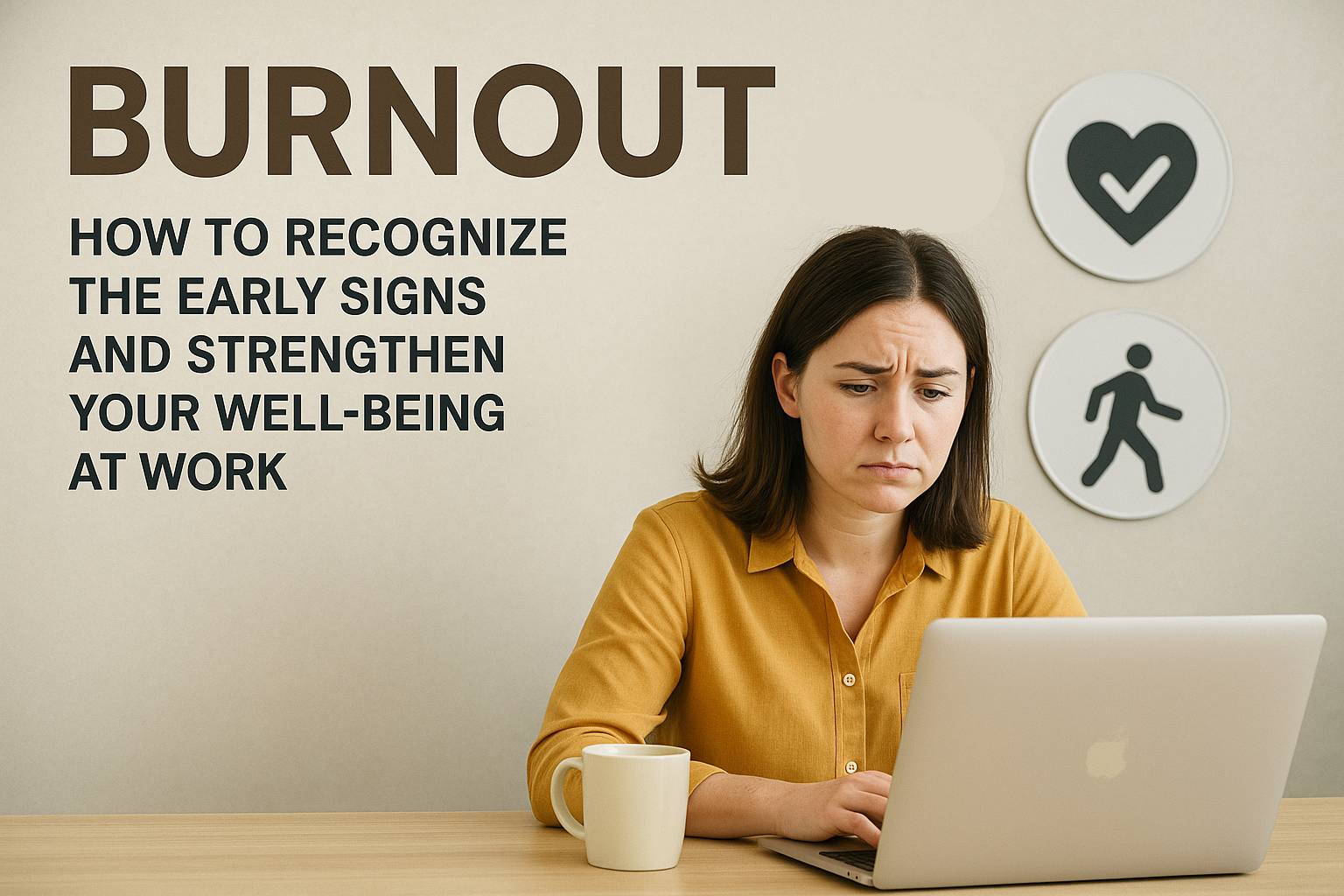
Burnout is a syndrome caused by prolonged stress. Its four key components are chronic fatigue, mental distancing from work, impaired cognitive control, and difficulties in regulating emotions. In the worst-case scenario, burnout can lead to a long sick leave and a slow recovery. This is why early recognition is essential – it enables timely recovery and helps prevent prolonged absence from work.
What Are the Early Signs of Burnout?
Fatigue that doesn’t improve with rest:
Waking up feeling as if you haven’t slept at all; feeling drained even after weekends or holidays.
Difficulty concentrating and remembering:
Even small tasks feel overwhelming; mistakes and forgetfulness increase.
Emotional exhaustion:
Indifference toward work tasks, cynicism, or constant irritability.
Declining motivation and self-esteem:
Things that once felt meaningful lose their significance; self-confidence decreases.
Sleep and appetite changes, physical symptoms:
Sleep problems, stomach issues, headaches, muscle tension, heart palpitations, recurring infections, or increased sick days.
Relationship challenges at work:
More conflicts, difficulty receiving feedback, or withdrawing from the team.
Loss of interest in anything outside of work:
You may be able to push through the workday, but afterwards you have little to no energy for personal activities.
FACT:
In Finland, 17% of employees experience fairly frequent or severe stress symptoms.
Quick Actions You Can Take Immediately
Make Small Adjustments to Your Work
Consider small improvements you could implement. What energizing factors could you add to your workday to protect yourself from burnout? Try alternative ways of completing tasks.
Prioritize and Set Boundaries
Create a list of what needs to be done and divide it into three categories:
- Important and urgent (Do today or discuss delegation with your supervisor.)
- Important but not urgent (Schedule later or delegate.)
- Not important or urgent (Eliminate these tasks.)
Separate Work and Free Time
Decide on a clear time after which you will no longer respond to work messages—even when working remotely. And stick to it.
Schedule Short Recovery Breaks
Take a 5–10 minute break every other hour. Use the time for light movement, stretching, walking, or breathing exercises. Ideally, go outside for a short walk twice a day—especially during the darker months, daylight boosts well-being.
Talk to Your Supervisor Sooner Rather Than Later
Explain what is causing strain and suggest possible solutions. Your supervisor is responsible for supporting your well-being at work.
Seek Support Elsewhere Too
Talk to a trusted colleague or friend. If needed, book an appointment with occupational health services. Share experiences and coping strategies with others.
Reduce Unnecessary Distractions During the Workday
Silence notifications, close unnecessary tabs, and limit meetings. Let your team know when you need uninterrupted focus time. Ideally, set shared signals or guidelines for concentration time.
Live a Full Life
Remember that work is only one part of life. Seek recovery and energy from activities outside of work. Maintain social connections, exercise, eat nourishing meals, and prioritize sleep.
Regularly assess your overall life situation and well-being.
Pause and ask yourself how you are doing—be honest and take action where needed. Listen to your loved ones if they express concern about your coping.
FACT:
Lifestyle habits affect not only our physical but also our mental well-being. Healthy habits support stress management in challenging life situations.
Self-Care and Everyday Changes That Promote Long-Term Recovery
- Sleep: Keep a regular bedtime, remove your phone from the bedroom, and practice relaxation before sleeping.
- Exercise: Move regularly 3–4 times a week to improve sleep quality and mood.
- Eating and hydration: Regular meals and adequate fluid intake help stabilize energy levels.
- Boundaries: Learn to say no and understand that postponed deadlines do not define your worth. You have the right to free time and enjoyment.
- Mental care: Short breathing exercises, mindfulness, or relaxation programs support emotional regulation.
- Professional help: An occupational health psychologist or therapist can provide tools and support for practical changes.
When to Seek Help – Don’t Stay Alone
Sometimes symptoms escalate before we manage to address them. In such cases, it is important to seek help.
If symptoms affect your daily functioning for several weeks, worsen, or if you experience signs of depression, suicidal thoughts, or heavy substance use, it’s time to let go of the idea of coping alone and reach out for support. You should also seek help if you have recurring sick leaves or struggle to manage essential tasks.
Contact occupational health or healthcare services. The right kind of support can stop symptoms from worsening and help you direct your energy toward recovery.
In Conclusion: Early Recognition and Prompt Action Can Change the Course
Act as soon as you notice the signs listed above: prioritize, communicate clearly, and seek professional support if needed. Early intervention protects both your health and your career.
You can read our previous blog post about mental health and workplace safety here.
Our eLearning module TVA Occupational Safety Training contains lessons about mental health at workplace. Click here to enroll our eLearning courses.